What Does a Doula Actually Do? (Beyond What You See on Instagram)
What Most People Think a Doula Does
If you’ve seen doula work online, it often looks like heading to the hospital at all hours of the day and night to support labor clients.
There are also some common assumptions:
that doulas just hold hands
give massages
offer affirmations
maybe rely on crystals or essential oils
But what’s missing from that picture?
You don’t see the hours of conversations and intention that go into creating a client’s birth preferences.
You don’t see the pep talks when the final weeks of pregnancy feel like they will last forever.
And you don’t always see what happens when parents, or even doulas, walk away with lingering emotions or trauma.
The version of doula work shown online is only a small part of the full picture.
What Does a Doula Actually Do?
A doula is a vessel.
They are a witness to the pinnacle of human experience: birth. Holding these experiences in a gentle but powerful way.
Doula support is meant to cultivate a safe, supportive environment for labor and birth. This takes time, relationship, and attunement.
Just as important is what we do not do:
we do not make medical decisions for our clients
we do not force our vision of what birth should be
we do not judge our clients for their choices
Our role is to support an experience that belongs entirely to the client.
What a Doula Does During Pregnancy
Education and Preparation
Prenatal preparation is a significant part of a doula’s work.
We discuss all the considerations that might be on our client’s mind, so it is important as a doula to be knowledgeable about a variety of perinatal circumstances, including:
gestational diabetes
placenta previa
depression and anxiety
TOLAC/VBAC
history of pregnancy loss
herpes, HIV, and other health considerations
It is important for a doula to be well-versed in many different presentations.
But these conversations go beyond clinical topics.
We also talk about:
family dynamics
who is important to the client
cultural or religious beliefs
preferences that may shape the birth or postpartum experience
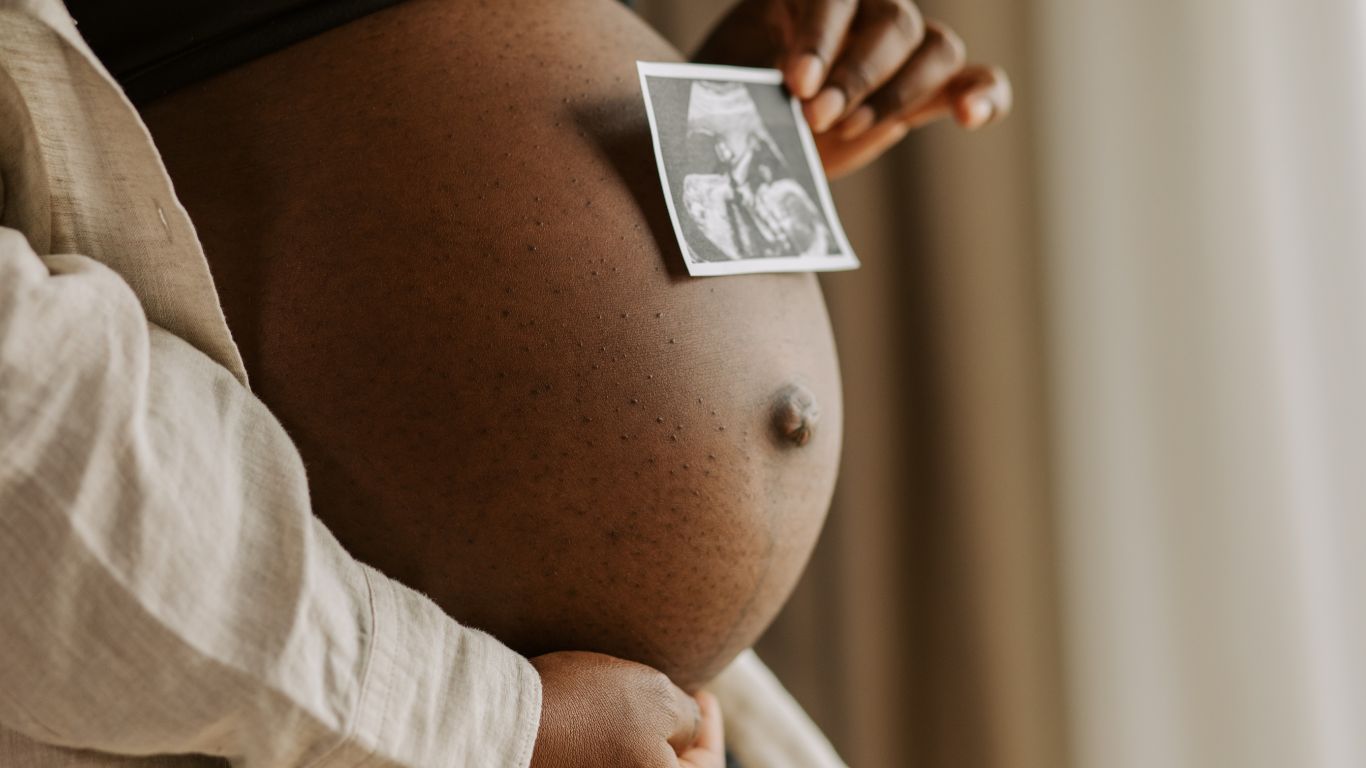
pregnant, holding image of ultrasound
Helping Clients Explore Options
Supporting decision-making without directing it means leaving behind your own biases and preferences.
It requires stepping into the mindset of your client without judgment.
This is how you provide comprehensive, aligned support.
For many doulas, this skill becomes one of the most pivotal and defining parts of their work.
Building Trust and Relationship
When a body is in labor, one of the most important feelings to cultivate is safety.
When a birthing person feels safe, their body is more able to relax and open, allowing labor to progress.
That sense of safety is not only created in the moment. It is built over time.
Trust is developed through connection, consistency, and relationship.
What a Doula Does During Labor
Physical Support
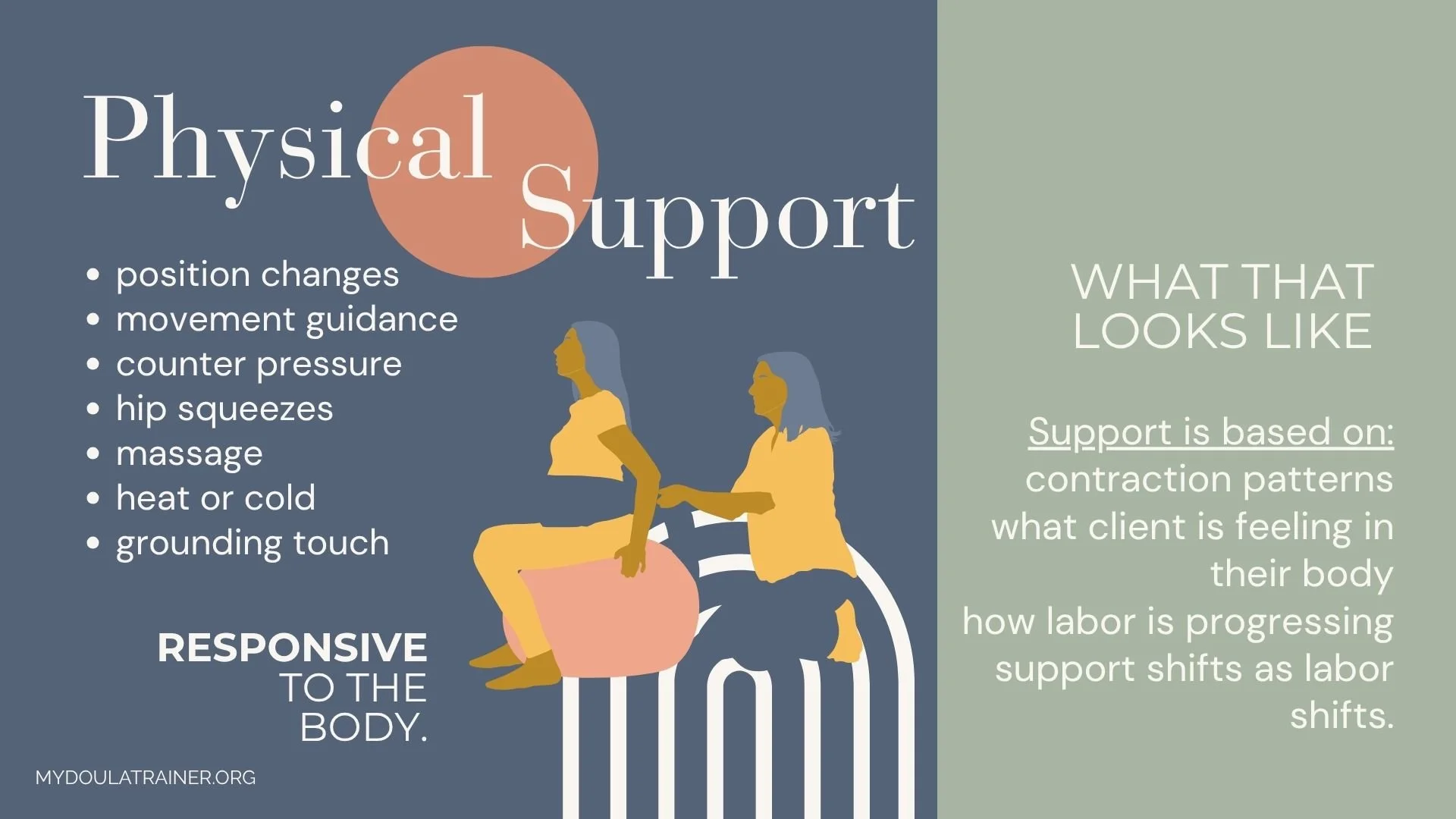
Before and throughout labor, doulas provide physical support through:
position suggestions and changes
movement guidance
counter pressure and hip squeezes
massage
temperature support (warmth or cold)
grounding touch
These choices are often based on:
contraction patterns
sensations in the client’s body
progression of labor
Emotional Support
Every client needs something different.
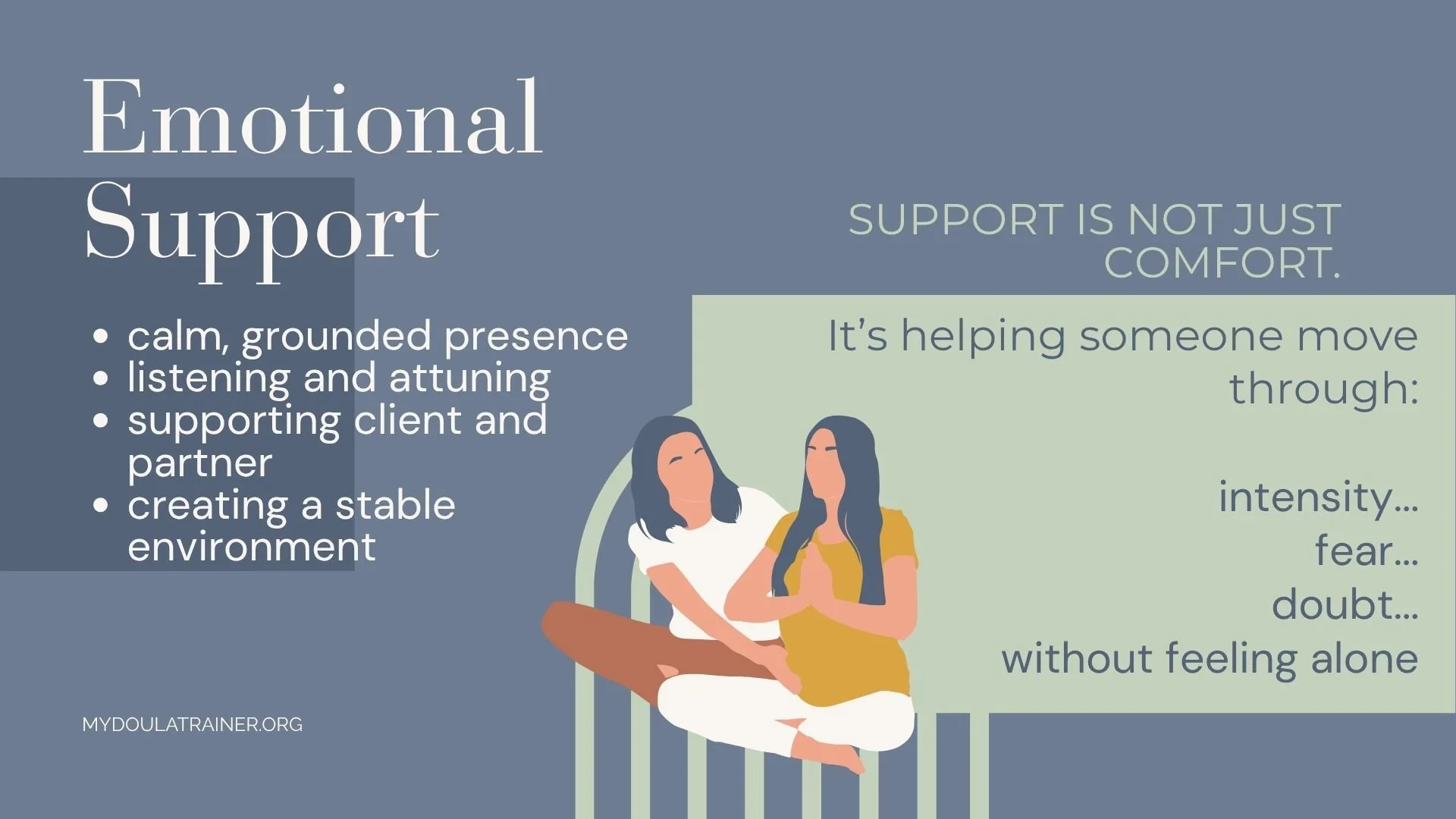
Doulas provide emotional support by:
maintaining a stable, calm environment
listening and responding to client needs
nurturing the relationship between client and partner
building a working relationship with the birth team
This support happens both in the moment and long before labor begins.
Communication Support
Labor can shift quickly depending on circumstances and medical needs.
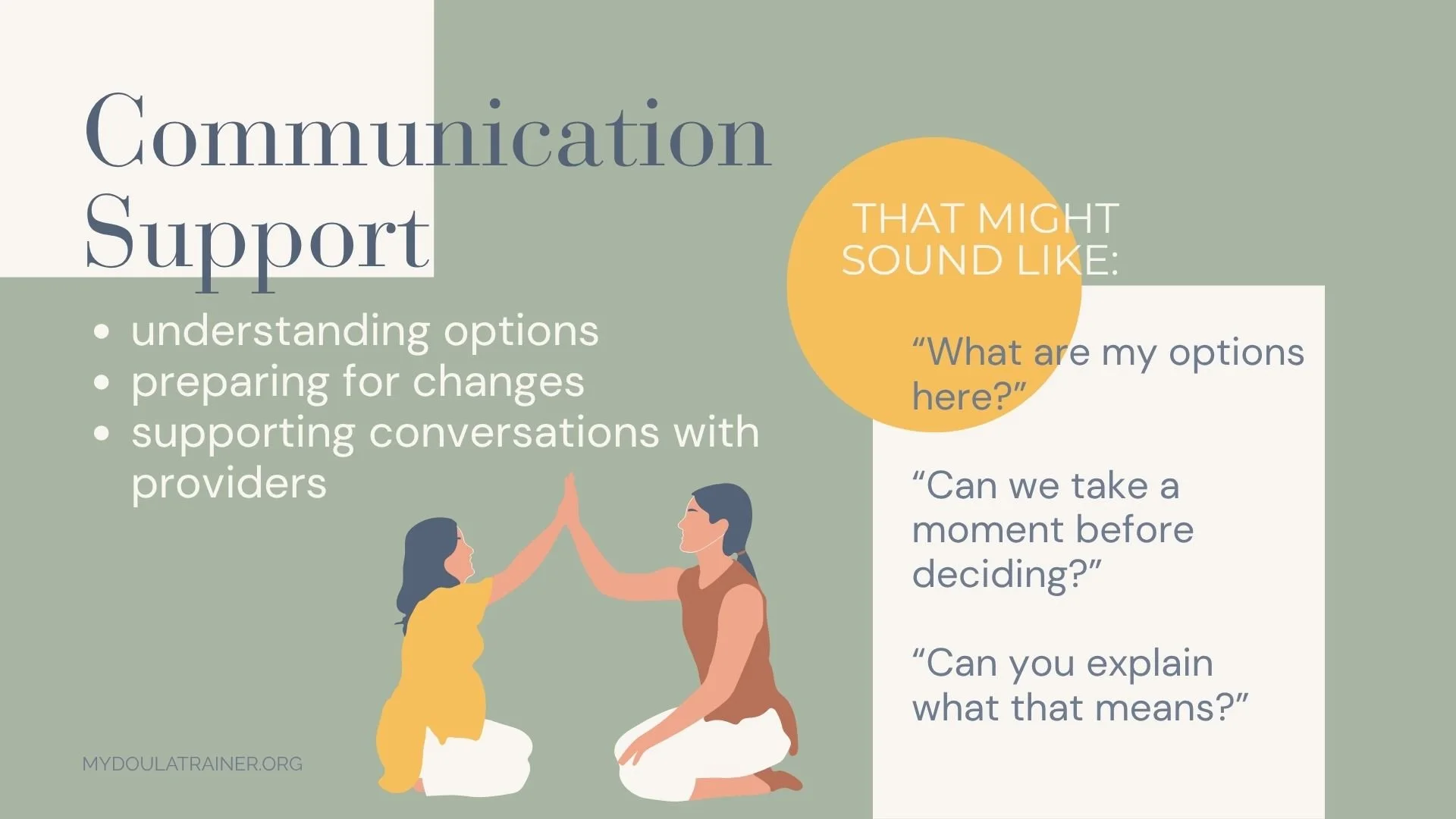
Having an in-depth understanding of available options allows a doula to:
help clients understand what is happening
anticipate possible changes
support communication with providers
For example:
discussing options around induction
understanding limitations of a home birth
helping a client find language to express their preferences
This kind of support allows clients to remain informed and involved in their care.
Maintaining a Grounded Environment
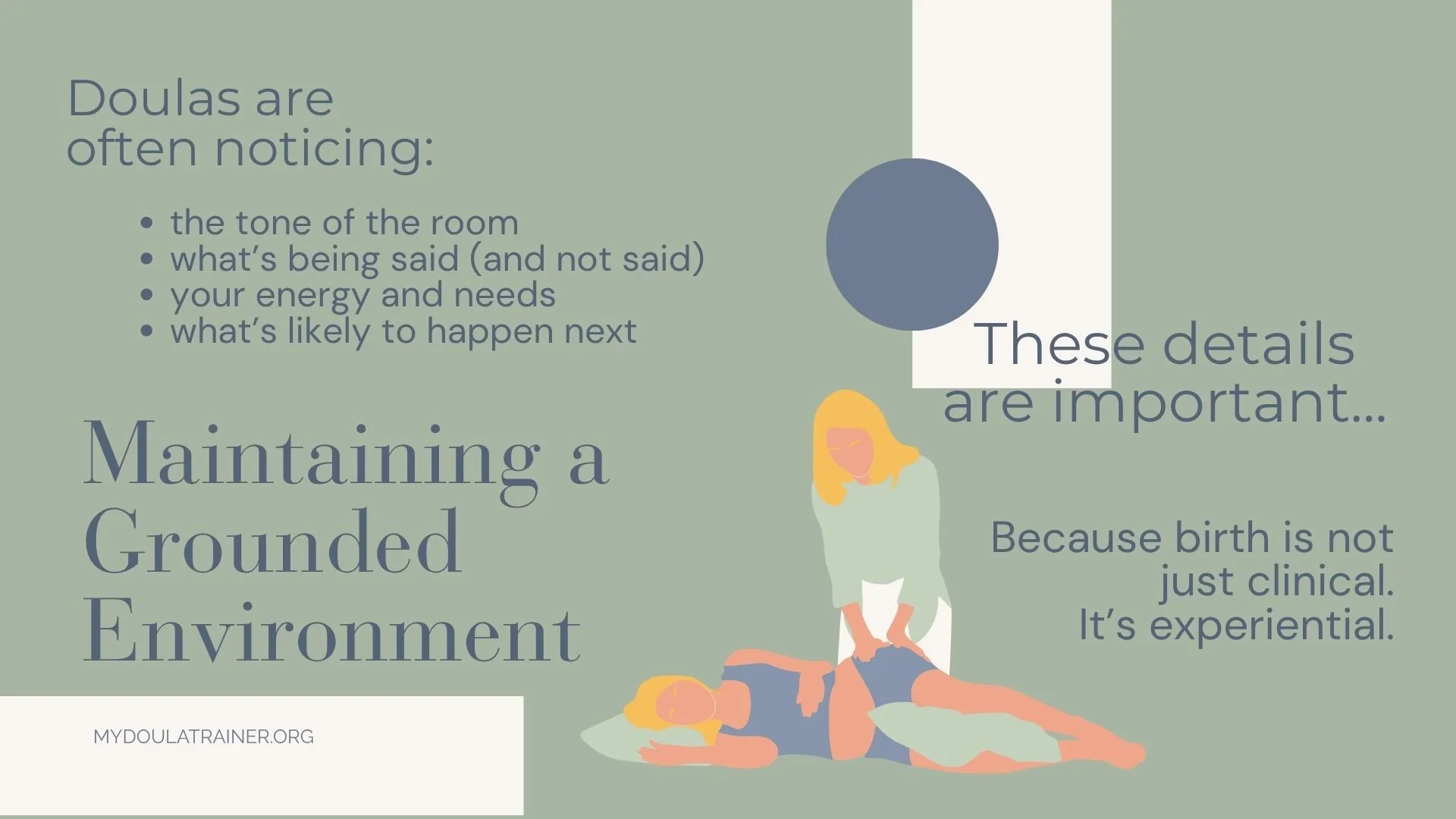
Doulas often pay attention to details that might otherwise go unnoticed:
the temperature of the room
what nurses and providers are focusing on
what information may not have been fully explained
what is likely to happen next
These details can shape a birth experience.
In fast-moving environments, explanations may be brief or missed. A doula helps bring attention back to the client’s experience, without taking over.

laboring through a contraction with doula support
What a Doula Does NOT Do
Doulas are not trained medical professionals, and we do not provide medical care.
We are, however, paramedical. This means it is important to be well-versed in:
medical language
procedures
systems of care
This allows us to provide relevant, up-to-date information so clients can better understand their options.
Doulas do not make decisions for clients.
This is not our birth story, and we cannot take ownership of it.
Doulas also do not replace partners or providers.
Instead, we:
strengthen the relationship between client and partner
support communication with providers
act as translators, mediators, and protectors of the birth environment
The Part No One Really Talks About
Beneath the surface, doula work is highly observational and responsive.
We are constantly taking in information:
how the client reacts to new information
how they relate to their partner and providers
the tone and temperament of the room
whether there is resistance to the client’s wishes
We must be ready to:
pivot
inform
protect space
respond in real time
What It Means to “Hold Space”
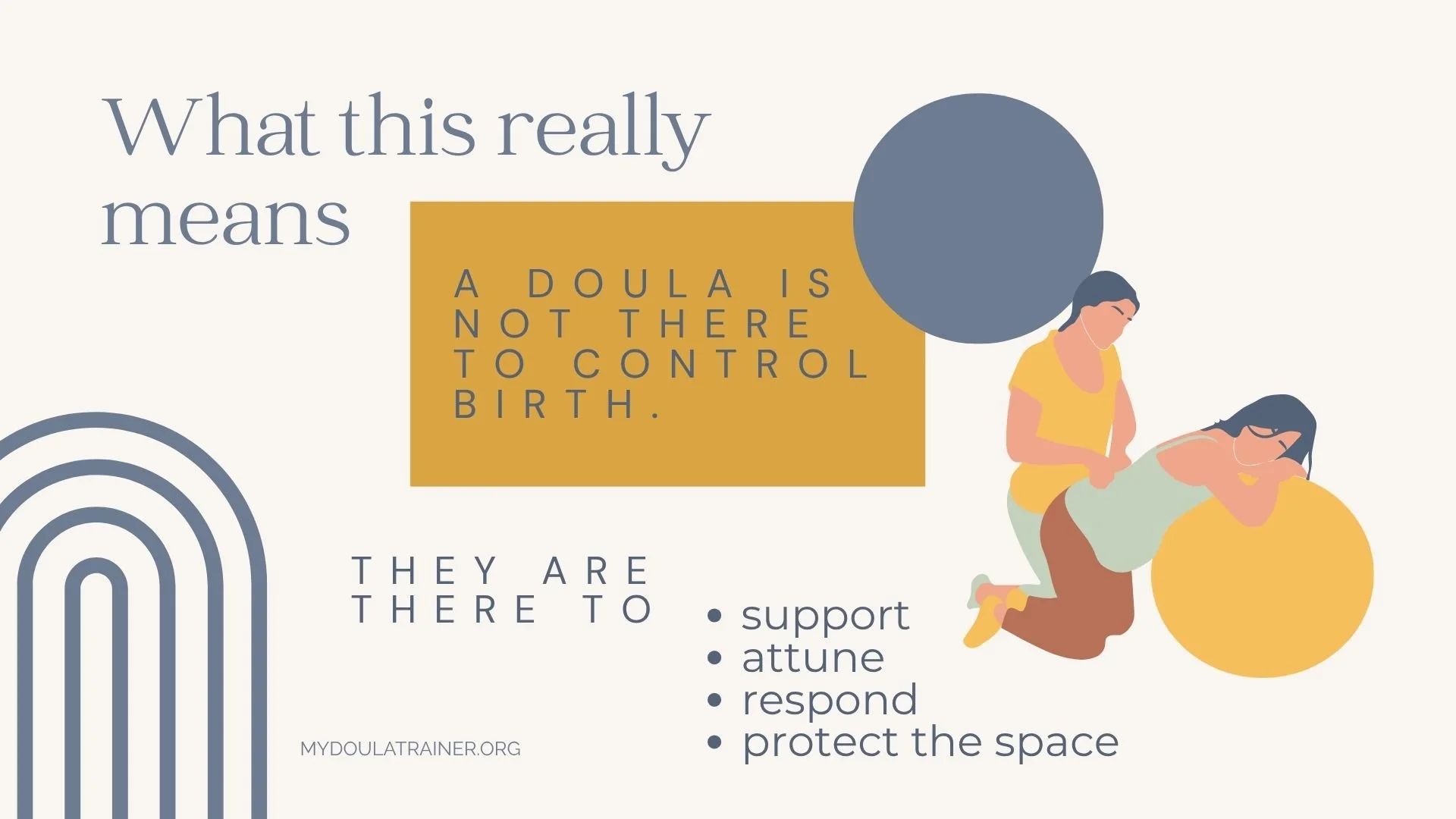
Holding space means being present without needing to control the outcome.
We are part of the experience, but we cannot claim it.
It is not up to us whether a client wants:
a quiet birth or a chatty one
medicated pain management or minimal intervention
We are active witnesses.
We curate the birth space based on what we know about our client, because we have spent time understanding their fears, preferences, and desires.
Holding space means:
creating safety
offering presence
providing unbiased support
Adapting to Change
What a client wants at 32 weeks may change at 41 weeks, or once labor begins.
This is not a reflection of their character.
It is a reflection of the intensity, unpredictability, and evolution of birth.
Medical necessities also can evolve as pregnancy and/or labor progresses.
Doulas must be:
flexible
open-minded
prepared to pivot
Plans can shift.
Sometimes a woman who is certain they want an unmedicated birth has prodromal labor and decides to use an analgesic to get some much needed rest.
or
Maybe your client’s baby flipped to head down and now their planned cesarean can change course to a spontaneous vaginal delivery.
Being prepared for change is a vital part of doula work.
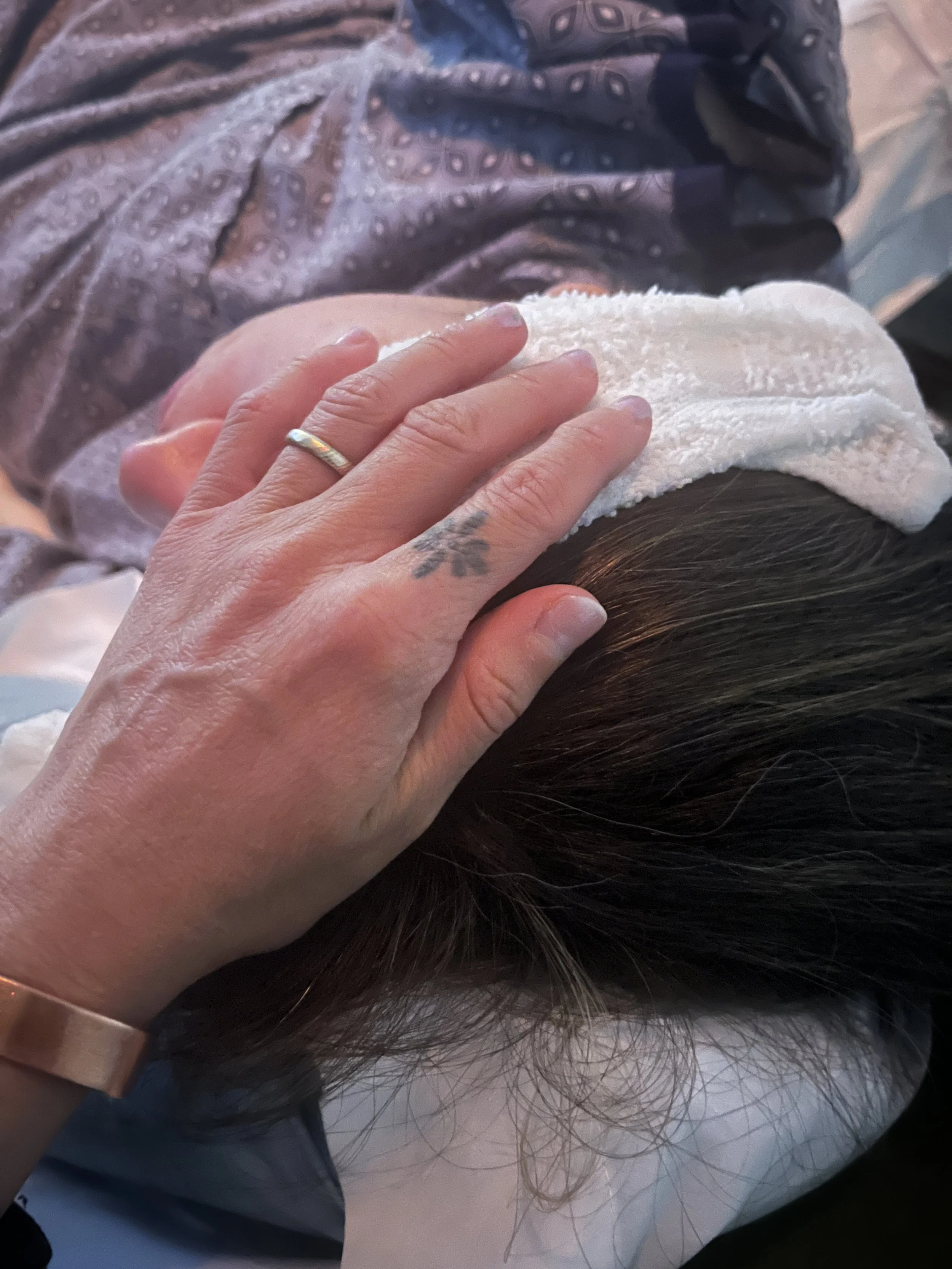
Doula holding cool washcloth to client's head during labor
Is Doula Work Right for You?
Doula work is not about having all the answers.
It’s about being willing to stay present, and support someone through one of the most impactful experiences of their life.
You might be drawn to this work if you:
feel a pull toward birth work
value connection and trust
are open to learning and growing
can stay grounded in emotional or uncertain moments
You don’t need a medical background or personal birth experience.
What matters most is your ability to listen, adapt, and support without taking over.
Final Thoughts: The Truth About Doula Work
Doula work is about creating space for someone to navigate birth in a way that feels supported, informed, and grounded in their own decisions.
This work is about:
presence
attunement
trust
As a doula, your role is not to lead the experience.
It is to witness it, support it, and protect space for it to unfold.
-
No. Doulas provide non-medical support and work alongside clinical providers as part of the birth team.
-
No. Doulas are not medical providers, but it is important to understand common procedures, language, and systems so you can support your clients effectively.
-
No. Personal birth experience is not required. What matters more is your ability to listen, learn, and support without judgment.
-
The most important skills are:
presence
adaptability
communication
humility
-
Research has shown that continuous support during labor is associated with:
lower cesarean rates
shorter labors
improved birth satisfaction
Continuous support for women during childbirth (Cochrane Review)
If you feel drawn to this work,
it’s probably because it’s right for you!
